Your car’s brakes are one of its most important safety systems. Even a small change in braking performance, such as unusual noise, vibration, or a soft pedal, can indicate a problem that needs attention. Recognizing these warning signs early can help prevent further damage and reduce the risk of losing control of your vehicle.
Brake problems can involve worn brake pads, damaged rotors, faulty calipers, contaminated brake fluid, or issues with the anti-lock braking system (ABS). While some symptoms develop gradually, others require immediate action.
For drivers in Mississauga, regular brake inspections are particularly important because daily traffic, frequent stops, wet roads, and winter road salt can affect braking components.
8 Warning Signs Your Car Needs Brake Service
Brake problems do not always appear as complete brake failure. They often begin with changes in sound, pedal feel, vehicle movement, or stopping distance.
Here are eight common signs your car may need professional brake service.
1. Squealing or Screeching Noises When Braking
A high-pitched squealing sound when applying the brakes is one of the most common warning signs. Many brake pads have built-in wear indicators that create a squealing noise when the friction material becomes thin.
However, worn pads are not the only possible cause. Moisture, surface rust, dust, debris, or certain pad materials can also produce temporary brake noise.
If the noise continues during normal driving or becomes more noticeable over time, arrange a brake inspection. A technician can measure the remaining brake pad thickness and check the rotors, calipers, and related hardware.
2. Grinding or Scraping Sounds
Grinding brakes should never be ignored. A harsh metallic sound when braking can mean the brake pads have worn down far enough for metal components to contact the rotor.
This contact can damage the brake rotor and increase repair costs. Debris caught between components or other mechanical faults may also cause scraping noises.
Is it safe to drive with grinding brakes? It is not advisable. Stop driving as soon as you can do so safely and arrange professional assistance or towing. Continuing to drive may make the damage worse and compromise braking performance.
3. Steering Wheel or Brake Pedal Vibration
If your steering wheel shakes or your brake pedal vibrates when you slow down, something may be affecting the braking system or another vehicle component.
One possible cause is uneven rotor thickness or rotor surface variation. When the brake pads contact an uneven rotor surface, the driver may feel vibration through the pedal or steering wheel.
Other possible causes include worn suspension components, loose steering parts, or wheel-related problems.
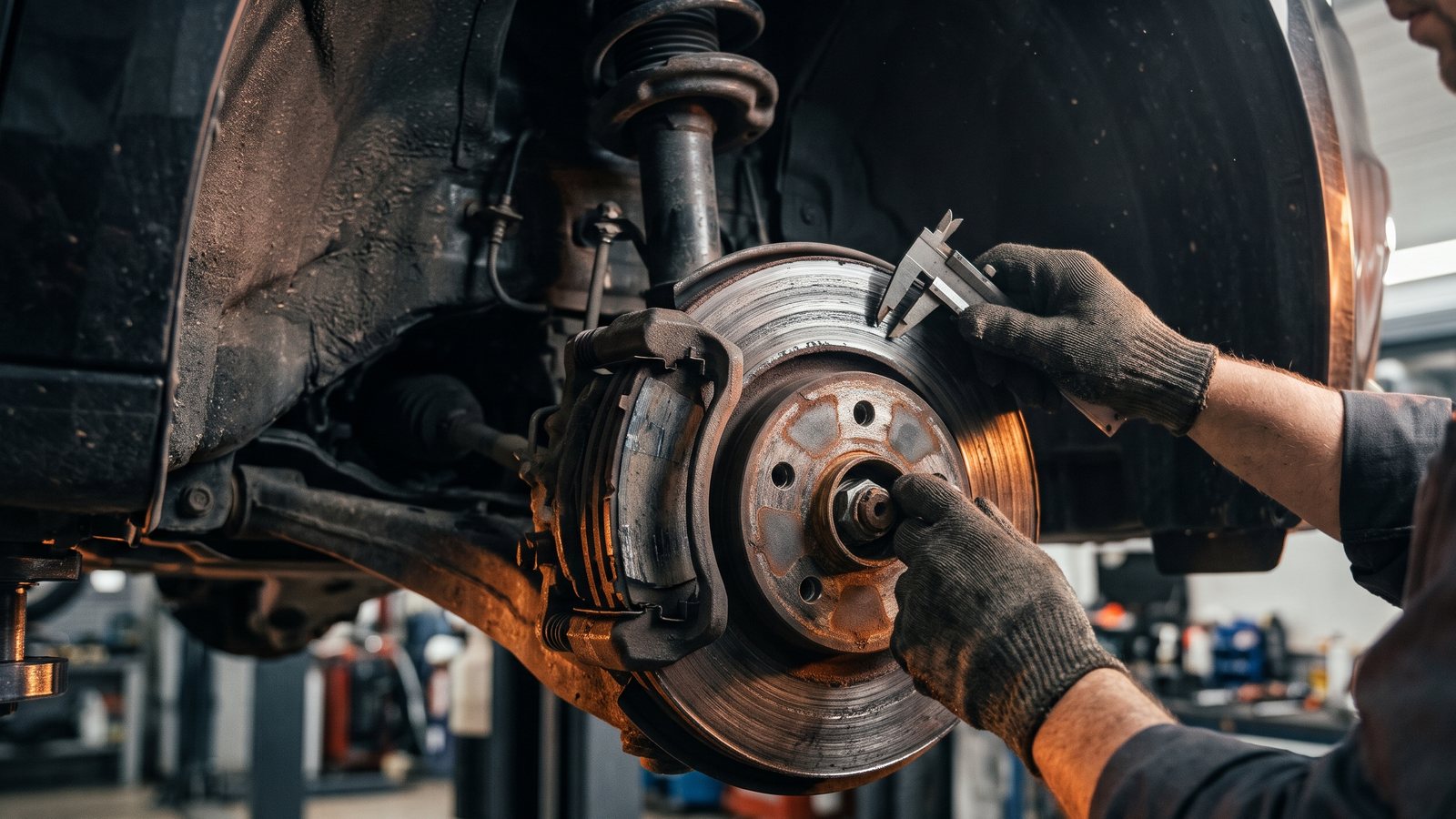
A technician may measure rotor thickness with a micrometer and check lateral runout using a dial indicator. These measurements help determine whether the rotors meet the vehicle manufacturer’s specifications.
4. Soft or Spongy Brake Pedal
A brake pedal that feels unusually soft, spongy, or sinks farther than normal can indicate a hydraulic braking system problem.
Possible causes include:
- Air trapped in the brake lines.
- Low or leaking brake fluid.
- Damaged brake hoses or lines.
- A failing master cylinder.
- Other hydraulic system faults.
Brake fluid transfers hydraulic pressure from the pedal to the braking components. If the system cannot maintain the correct pressure, braking performance may be reduced.
A sinking or unusually soft pedal is a serious warning sign. Pull over safely and arrange professional assistance rather than continuing to drive.
5. Your Car Pulls to One Side While Braking
If your vehicle moves left or right when you apply the brakes, the braking force may not be equal across the wheels.
A sticking brake caliper, uneven pad wear, damaged brake hose, or contaminated friction material could contribute to this problem. Tire pressure, alignment, and suspension issues may also affect vehicle direction.
A technician should inspect the brake pads, calipers, hoses, tires, and suspension components to identify the actual cause.
Do not ignore repeated pulling during braking, particularly if it affects your ability to maintain control.
6. Longer Stopping Distances
If your vehicle takes longer than usual to stop, its braking performance may have deteriorated.
Possible reasons include worn brake pads, damaged rotors, overheated braking components, contaminated brake fluid, or a problem with the hydraulic system.
Wet or slippery roads can also increase stopping distances, but a noticeable change under normal driving conditions deserves attention.
Avoid high speeds and unnecessary journeys until the braking system has been inspected. If the brakes feel weak or the vehicle struggles to stop, pull over safely and arrange assistance.
7. Brake Warning Light or ABS Light
Dashboard warning lights can indicate different types of brake problems.
A red brake warning light may be related to the parking brake, low brake fluid, or a fault in the conventional braking system. If it stays illuminated after releasing the parking brake, stop safely and seek assistance.
An ABS warning light usually indicates a problem with the anti-lock braking system. The conventional braking system may still provide braking, but the anti-lock function could be unavailable. This can affect wheel control during hard braking, particularly on slippery roads.
Possible ABS-related faults include damaged wheel speed sensors, wiring problems, or an electronic brake control module issue.
A diagnostic scan and physical inspection can help identify the fault. Never assume an illuminated brake warning light is harmless.
8. Burning Smell, Smoke, or Excessive Heat
A sharp burning smell after braking may indicate overheating. This can happen when a brake caliper sticks, the parking brake does not release properly, or a component remains in contact with the rotor.
Excessive heat can damage brake pads, rotors, seals, and other parts. Smoke coming from a wheel is especially concerning.
Pull over somewhere safe if you notice smoke or a strong burning smell. Do not touch the wheel or brake components because they may be extremely hot. Arrange professional assistance before continuing your journey.
Common Brake Problems and What They May Mean
Different symptoms can point to different parts of the braking system. The following table provides a general guide, not a confirmed diagnosis.
| Warning sign | Possible cause | Recommended action |
| Squealing noise | Worn pads, moisture, or debris | Arrange an inspection if persistent |
| Grinding noise | Severe pad wear or metal contact | Stop driving and arrange assistance |
| Vibration when braking | Rotor variation or suspension fault | Book a prompt inspection |
| Soft brake pedal | Hydraulic leak, air, or master cylinder fault | Stop safely and seek assistance |
| Vehicle pulls to one side | Sticking caliper or uneven braking | Arrange prompt inspection |
| Longer stopping distance | Worn or faulty brake components | Avoid unnecessary driving and get checked |
| Red brake warning light | Parking brake, fluid, or system fault | Stop safely and investigate |
| Burning smell or smoke | Overheated or sticking brake components | Stop safely and arrange assistance |
When Should You Stop Driving Because of Brake Problems?
Not every brake noise means immediate brake failure, but some symptoms make continued driving unsafe.
| Urgency | Symptoms | What to do |
| Immediate | Soft or sinking pedal, suspected fluid leak, severe loss of braking, grinding with poor braking, smoke | Stop safely and arrange towing or professional assistance |
| Prompt inspection | Persistent squealing, vibration, pulling, unusual pedal feel, warning lights | Arrange a professional brake inspection as soon as possible |
| Monitor and check | Brief noise after rain or overnight moisture that disappears quickly | Monitor the symptom and arrange an inspection if it persists or returns |
If you are unsure whether your vehicle can stop safely, do not risk driving it to a repair shop. Arrange professional assistance.
Brake Pads vs Brake Rotors: What Needs Replacing?
Brake pads and rotors work together to slow your vehicle, but they do not always need replacement at the same time.
Brake pads contain friction material that presses against the rotor to slow the wheels. They gradually wear down through normal use.
Brake rotors are metal discs attached to the wheels. They provide the surface against which the brake pads create friction.
A technician checks pad thickness, rotor condition, surface damage, and manufacturer specifications before recommending repairs.
| Component | Common warning signs | When replacement may be needed |
| Brake pads | Squealing, grinding, reduced friction material | When below the manufacturer’s service limit |
| Brake rotors | Vibration, scoring, excessive wear | When damaged or below minimum thickness |
| Brake calipers | Pulling, uneven pad wear, overheating | When sticking, leaking, or mechanically faulty |
| Brake fluid | Low level, leaks, or fluid condition concerns | When inspection or manufacturer guidance indicates service |
Replacing pads and rotors together is not automatically necessary. If the rotors remain within specification and are in suitable condition, a technician may recommend replacing only the pads. Damaged or excessively worn rotors may require replacement as well.
What Happens During a Professional Brake Inspection?
A proper brake inspection involves more than listening for unusual noises. Technicians examine the braking system and use measurements to determine whether components are safe and serviceable.
A typical inspection may include:
- Brake pad inspection: A thickness gauge helps measure remaining friction material and identify uneven wear.
- Rotor inspection: Technicians check rotor surfaces, thickness, and condition against manufacturer specifications.
- Caliper inspection: They examine caliper pistons, slides, seals, and hardware for sticking, damage, or leaks.
- Brake fluid check: The fluid level and condition are assessed, along with the master cylinder and hydraulic system.
- Brake lines and hoses: Technicians look for leaks, corrosion, cracks, and other damage.
- ABS diagnostics: An OBD-II diagnostic scanner may retrieve relevant electronic fault codes from the ABS system.
- Road test: When safe and appropriate, a road test can help evaluate braking performance and confirm symptoms.
The inspection findings help determine whether the vehicle needs brake pad replacement, rotor service, caliper repair, brake fluid service, or further diagnosis.
How Much Does Brake Service Cost in Mississauga?
Brake repair costs vary depending on the vehicle and the parts that need attention. A simple brake pad replacement will generally involve different parts and labour than a repair involving pads, rotors, calipers, or hydraulic components.
Factors that influence the total cost include:
- Vehicle make, model, and braking system design.
- Whether the front or rear brakes need service.
- Brake pad material and specifications.
- Rotor condition and replacement requirements.
- Caliper repair or replacement.
- Brake fluid service and hydraulic repairs.
- Labour and additional hardware or sensor requirements.
Before approving work, ask for an itemized estimate that explains which components need replacement and why. You can also ask whether the rotors meet the manufacturer’s minimum thickness specifications and whether the quote includes parts and labour.
A clear inspection report makes it easier to understand the recommended work and avoid unnecessary replacements.
How Ontario Winter Conditions Affect Your Brakes
Mississauga drivers regularly deal with rain, snow, freezing temperatures, and road salt. These conditions can affect brake components over time.
Road salt and moisture can contribute to corrosion on exposed metal parts, including brake lines and hardware. Surface rust can also develop on brake rotors after a vehicle sits in wet conditions.
A brief noise after rain or overnight parking may disappear after normal braking. However, persistent grinding, unusual vibration, or changes in pedal feel should not be dismissed as ordinary winter effects.
Transport Canada recommends checking brake condition as part of winter vehicle preparation. Ontario Regulation 611 also sets out braking-system requirements for applicable vehicle safety inspections, although it is not a universal maintenance schedule for every privately owned car.
Whether you commute through Port Credit, Streetsville, Meadowvale, Erin Mills, Clarkson, Cooksville, or around Square One, pay attention to changes in braking performance during everyday driving. Stop-and-go traffic and regular commuting on Highway 401, the QEW, and Highway 403 make reliable brakes especially important.
Where to Get Brake Service in Mississauga
If your vehicle shows signs of brake problems, a professional inspection can help identify the cause before the condition becomes more serious.
Spot Free Auto Spa & Auto Repair provides automotive brake repair services in Mississauga, including brake-related maintenance and repair as part of its broader automotive care offering.
When choosing a repair provider, look for technicians who can:
- Inspect pads, rotors, calipers, and hydraulic components.
- Use appropriate tools to measure brake wear and rotor condition.
- Diagnose ABS warning lights and related electronic faults.
- Explain inspection findings in clear language.
- Provide an estimate before starting additional repairs.
- Follow the vehicle manufacturer’s service specifications.
For brake service or other automotive repair needs, contact Spot Free Auto Spa & Auto Repair at (416) 856-3349.
You can also read our guide to auto repair services in Mississauga to learn more about maintaining your vehicle and addressing common mechanical problems.
Final Thoughts
Brake problems often begin with small changes, such as squealing noises, vibration, pulling, or an unusual pedal feel. Recognizing these warning signs early can help prevent further component damage and protect your safety on the road.
Grinding noises, a sinking brake pedal, smoke, suspected fluid leaks, and reduced braking performance require particular attention. Do not continue driving when your vehicle may not stop safely.
For drivers in Mississauga, regular brake inspections and timely repairs are especially valuable during changing Ontario weather conditions. If something about your brakes feels or sounds different, arrange a professional inspection rather than waiting for the problem to become worse.
FAQs
1. What are the first signs of brake problems?
The first signs often include squealing noises, grinding, vibration when braking, a soft brake pedal, longer stopping distances, or a vehicle pulling to one side. These symptoms can indicate worn pads, rotor problems, caliper faults, or hydraulic issues.
2. Why do my brakes squeak when I stop?
Brake squeaking can result from worn brake pad indicators, moisture, surface rust, dust, debris, or pad material. If the noise continues or becomes louder, have the braking system inspected.
3. How long can you drive with worn brake pads?
There is no safe universal distance for driving with worn brake pads. Once the friction material becomes too thin, braking performance can deteriorate and the rotors may become damaged. Arrange an inspection promptly.
4. Should brake pads and rotors always be replaced together?
No. Brake pads and rotors do not always need replacement at the same time. A technician checks rotor thickness, surface condition, and manufacturer specifications before deciding whether the existing rotors can remain in service.
5. What causes a soft brake pedal?
A soft or spongy brake pedal may indicate air in the brake lines, low or leaking brake fluid, damaged hoses, or a failing master cylinder. Because hydraulic faults can affect stopping ability, stop safely and arrange professional assistance.
6. Is it safe to drive with an ABS warning light on?
An illuminated ABS warning light usually indicates that the anti-lock braking function may not be working correctly. Conventional braking may still operate, but the vehicle may not have normal ABS protection during hard braking. Arrange prompt diagnosis, and stop safely if braking performance changes or another brake warning appears.
7. Can cold weather make brakes squeak?
Yes. Moisture and light surface rust can cause temporary brake noise after a vehicle sits in cold or wet conditions. If the noise disappears after normal braking, it may be temporary. Persistent squealing or grinding requires inspection.
8. Can a bad brake caliper damage a rotor?
Yes. A sticking caliper can keep the brake pad in contact with the rotor, creating excessive heat and uneven wear. This may damage the rotor and cause pulling, burning smells, or uneven pad wear.
9. How often should car brakes be inspected?
Brake inspection frequency depends on the vehicle manufacturer’s maintenance recommendations, driving conditions, and component wear. Have the brakes checked when unusual symptoms appear and during scheduled maintenance rather than relying on one mileage interval for every vehicle.
10. Can road salt damage brake lines?
Yes. Road salt and moisture can contribute to corrosion on exposed brake lines and other metal components. Regular inspections can help identify corrosion, leaks, or damage before they affect braking performance.