
Brake service in Mississauga covers the inspection, maintenance, diagnosis, and repair of your vehicle’s braking system. Depending on the condition of your brakes, service may include brake pad or rotor replacement, caliper inspection, brake fluid service, and diagnosis of braking problems. Spot Free Auto Spa helps drivers identify brake concerns and determine the appropriate service for their vehicle.
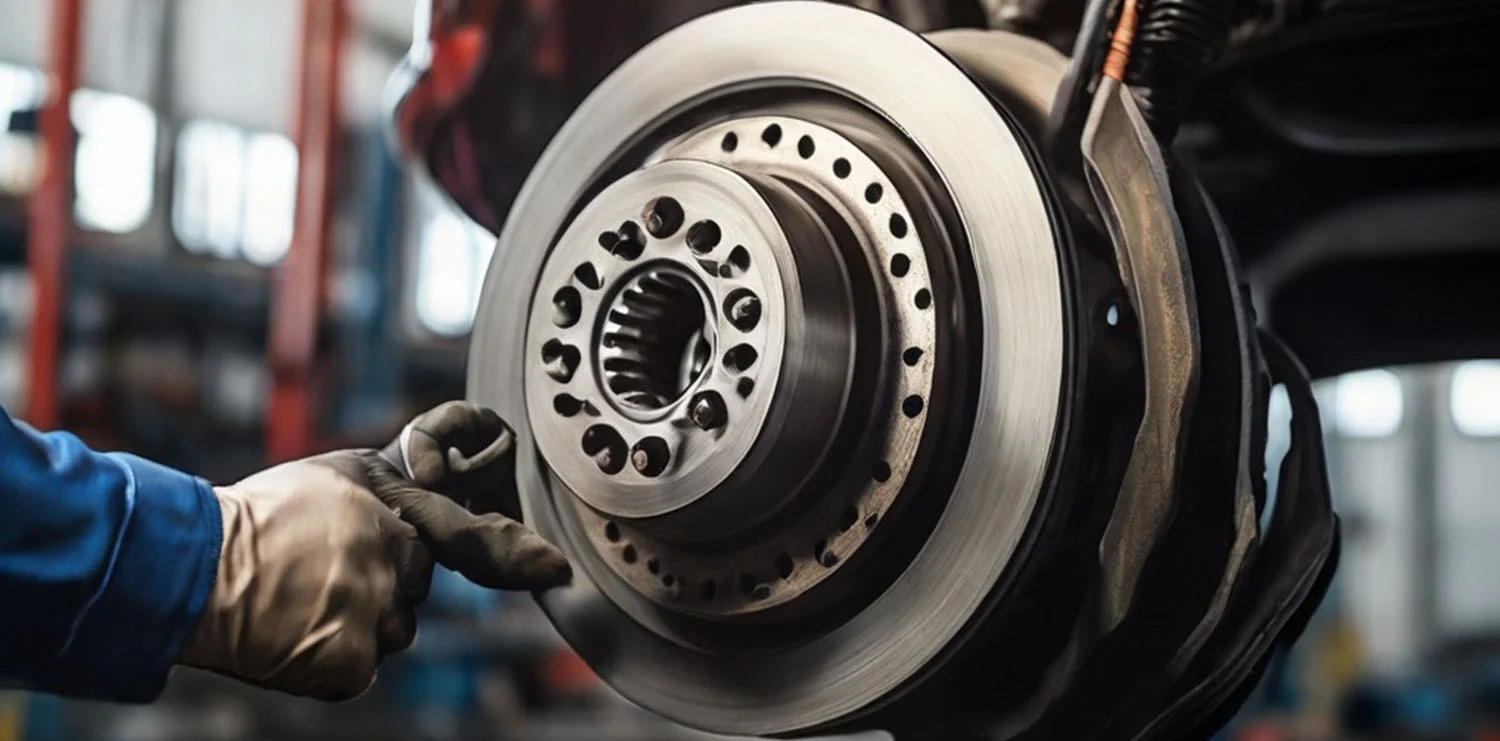
Your brakes are one of the most important safety systems on your vehicle. Every time you slow down, stop at an intersection, or react to unexpected traffic, you rely on the braking system to work properly.
Brake components naturally wear with use. Brake pads become thinner, rotors can develop wear or surface damage, and other components may eventually require inspection or service. Mississauga drivers also deal with conditions such as winter temperatures, moisture, road salt, traffic congestion, and frequent stop-and-go driving, all of which can affect vehicle maintenance needs.
If you've noticed squealing, grinding, vibration, pulling, a soft brake pedal, or a change in braking performance, don't ignore it.
At Spot Free Auto Spa, our brake service in Mississauga is designed to help identify the cause of brake-related symptoms and address the components that actually require attention.
The goal is straightforward: understand the condition of your braking system, explain what needs attention, and help you make an informed maintenance or repair decision.
The exact service can vary depending on your vehicle and maintenance requirements, but a professional oil change generally involves several important steps.
The existing engine oil is drained from the vehicle so that contaminated and degraded oil can be removed before fresh oil is added.
An oil filter helps capture contaminants that could otherwise circulate through the engine. Replacing the filter at the appropriate service interval helps maintain effective filtration.
The engine is refilled with the correct amount and specification of oil for the vehicle. Using the manufacturer's recommended specification is important because different engines can require different oil grades and formulations.
The oil level is checked after the new oil has been added to ensure the engine has the appropriate amount.
As part of routine maintenance, obvious issues such as fluid levels, leaks or other visible concerns may be identified during service. If something requires additional attention, you should be informed rather than having unnecessary work performed without your knowledge.
Car brake service refers to the inspection, maintenance, diagnosis, and repair of the components that allow your vehicle to slow and stop.
A typical braking system can include:
Not every brake problem requires the same repair.
For example, worn brake pads may require replacement, while a vibration during braking could involve the rotors or another part of the vehicle. A soft pedal could have several possible causes and should be properly assessed rather than treated as a simple pad replacement.
That is why a brake inspection is an important starting point when you experience a new braking problem.
Brake service can involve different types of maintenance and repair depending on your vehicle's condition.
Brake pads are friction components that press against the brake rotors when you apply the brakes.
Because they gradually wear during normal driving, they need to be inspected periodically and replaced when they reach an appropriate service limit.
Signs of worn brake pads can include:
Brake-pad wear varies based on driving habits, traffic conditions, vehicle weight, brake design, and other factors.
Brake rotors provide the friction surface against which the brake pads operate.
Rotors can develop excessive wear, grooves, corrosion, thickness variation, or other damage over time.
If a rotor is no longer within the appropriate service specifications, replacement may be necessary.
If you’re experiencing steering-wheel or brake-pedal vibration while stopping, a brake inspection can help determine whether the rotors are contributing to the problem.
Brake calipers apply pressure to the brake pads so they can contact the rotor.
A caliper that is not operating correctly can affect braking performance and may contribute to uneven brake-pad wear or other problems.
If one side of the braking system is behaving differently from the other, the calipers and related components may need to be assessed.
Brake fluid transfers hydraulic pressure through the braking system.
Brake fluid maintenance requirements vary by vehicle and manufacturer. Over time, brake fluid can absorb moisture and its condition can change.
If your vehicle is due for brake-fluid maintenance, the appropriate service should be performed according to the manufacturer’s recommendations.
An inspection can help identify worn or damaged components before a small concern develops into a larger problem.
Depending on the vehicle and symptoms, inspection may include the condition of brake pads, rotors, calipers, fluid, visible brake components, and other relevant systems.
Brake problems don't always begin with complete loss of braking ability. Often, your vehicle provides warning signs first.
A high-pitched noise can sometimes indicate brake-pad wear, although brake noise can have several causes. If the noise is persistent or changes with braking, it's worth having the system assessed.
Grinding is more concerning and should not be ignored. It can indicate severe brake-component wear or another mechanical problem. Continuing to drive without an inspection may result in additional damage.
If the steering wheel, brake pedal, or vehicle vibrates when you apply the brakes, the cause should be investigated. Rotor-related problems are one possible cause, but wheel, tire, suspension, and other brake issues can also create similar symptoms.
If the vehicle consistently pulls to one side when braking, there may be an issue with braking force distribution or another vehicle system. This should be assessed rather than assuming the problem is simply worn brake pads.
A brake pedal that feels unusually soft, spongy, or different from normal requires attention. Hydraulic issues, air or moisture in the system, fluid problems, and other faults can affect pedal feel.
If you feel that your vehicle requires more distance to stop than it normally does, have the braking system checked. Changes in braking performance should never be dismissed as normal wear without determining the cause.
A brake or ABS warning light can indicate a problem that requires diagnosis. Because warning systems can relate to different components, the light should be investigated rather than simply reset.
Choosing a brake service provider is about more than replacing a worn component.
You need a service approach that considers the entire braking system and helps you understand what actually needs attention.
A brake symptom does not always identify the failed component.
For example, vibration doesn't automatically mean the rotors need replacement, and a noise doesn't automatically mean the brake pads are worn out.
Proper assessment helps avoid unnecessary repairs.
Brake systems differ between vehicles. Components, specifications, service limits, and maintenance requirements can vary by make, model, year, and configuration.
Brake service should therefore be based on the vehicle rather than a one-size-fits-all approach.
Brake repairs can be unexpected expenses. Before approving additional work, it is important to understand what has been identified and why the work may be necessary.
We aim to explain recommended brake services clearly so you can make an informed decision.
Brake maintenance is one part of overall vehicle maintenance.
If your vehicle also requires other automotive services, you can discuss those needs with the team rather than having to treat every maintenance concern separately.
Keeping your braking system properly maintained provides several practical benefits.
Brake components that are within their appropriate service condition can help your vehicle's braking system operate as intended.
Regular inspection can help identify worn pads, damaged rotors, leaks, or other concerns before they become more serious.
Ignoring worn brake components can sometimes allow related parts to become damaged as well.
A properly maintained braking system is an essential part of safe vehicle operation.
Identifying brake wear early can give you more time to understand the repair requirements and plan maintenance rather than being surprised by a major problem later.
We first want to understand what you have noticed, whether that's noise, vibration, pulling, reduced braking performance, or a warning light.
The braking system and relevant components are assessed based on the vehicle and reported symptoms.
The inspection findings are considered to determine which component or system may be responsible.
You'll be informed about what has been identified and which components may require attention.
The recommendation may involve routine maintenance, brake-pad replacement, rotor replacement, fluid service, caliper-related work, or further diagnosis depending on the findings.
Once the required service has been discussed and approved, the appropriate work is completed according to the vehicle's requirements.
The completed brake service is reviewed before the vehicle is returned.
There is no universal brake-service interval for every vehicle. Brake wear depends on driving habits, traffic, vehicle weight, brake design, road conditions, and other factors. Your brakes should also be inspected whenever you notice a change in noise, pedal feel, vibration, or stopping performance.
Common signs include persistent squealing, grinding, reduced braking performance, a brake-wear warning, or visibly thin friction material. The actual replacement point should be determined by inspecting the brake pads and considering the vehicle manufacturer’s specifications.
There is no fixed lifespan for every vehicle. City driving, frequent stops, driving style, vehicle weight, brake design, road conditions, and component quality can all affect service life.
Not always. The condition of both components should be assessed. If the rotors are still within their appropriate service specifications and the pads are suitable for continued use, replacement of both may not be necessary. If either component is worn or damaged, replacement may be recommended.
Brake noise can have several causes, including normal friction, worn pads, rotor surface conditions, debris, corrosion, or other brake-system issues. Persistent grinding or unusual noises should be inspected rather than ignored.
Brake vibration can be related to rotor thickness variation or surface problems, but it can also come from tires, wheels, suspension components, or other brake-system issues. An inspection is necessary to identify the cause.
A brake warning light should not be ignored. Depending on the vehicle and warning system, it may indicate different issues. If the light appears together with reduced braking performance, a soft pedal, fluid leakage, or another serious symptom, avoid driving the vehicle and seek professional assistance.
Your braking system deserves attention as soon as you notice a change.
Whether you’re dealing with brake noise, vibration, worn pads, damaged rotors, a soft pedal, or another braking concern, Spot Free Auto Spa can help assess the issue and determine the appropriate next step.
Don’t wait for a minor brake problem to become a larger repair.
Contact Spot Free Auto Spa today to ask about brake service in Mississauga and schedule an assessment for your vehicle.