
Rotor replacement in Mississauga involves removing worn, damaged, or excessively deteriorated brake rotors and installing suitable replacements according to your vehicle’s specifications. Brake rotors work with the brake pads and calipers to slow and stop your vehicle. If you experience braking vibration, grinding, uneven braking, or visible rotor damage, professional brake inspection can determine whether replacement is needed.

Your vehicle's braking system is one of its most important safety systems. Every time you slow down or stop, the brake pads press against the brake rotors to convert the vehicle's motion into heat and reduce speed.
Over time, brake rotors can wear, develop surface damage, become excessively corroded, or develop thickness and surface irregularities that affect braking performance. Ontario driving conditions can also expose brake components to moisture, road salt, dirt, and temperature changes.
If your steering wheel vibrates while braking, your vehicle pulls to one side, you hear grinding or scraping, or braking simply doesn't feel the way it used to, it's worth having the complete brake system assessed.
At Spot Free Auto Spa, our rotor replacement service is focused on identifying whether your rotors actually need replacement and addressing the underlying brake-system concern rather than replacing components unnecessarily.
A brake rotor is the flat disc that rotates with the wheel. When you press the brake pedal, the caliper pushes the brake pads against the rotor. The friction between the pads and rotor slows the wheel and helps bring the vehicle to a stop.
Rotor replacement means removing a brake rotor that has reached the end of its serviceable condition and installing an appropriate replacement.
Rotors can become unsuitable for continued use because of:
A rotor should not be replaced simply because it looks old. Its condition, measurements, braking symptoms, and vehicle specifications should all be considered when determining whether replacement is appropriate.
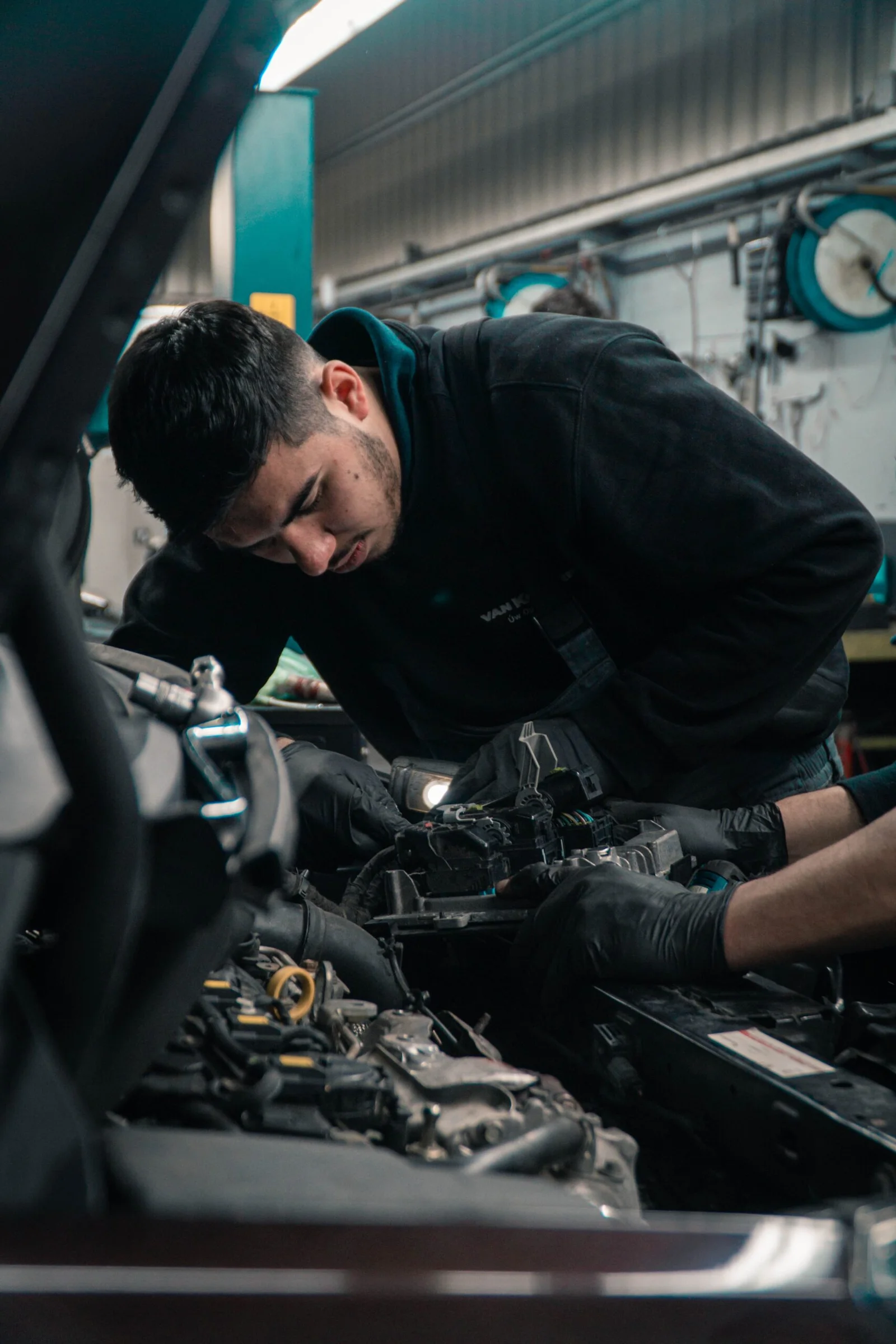
Brake rotor problems can present themselves in different ways. Some symptoms are noticeable while driving, while others may only be discovered during a brake inspection.
One of the more recognizable brake complaints is a vibration or pulsation when applying the brakes.
You may feel it through the steering wheel, brake pedal, or vehicle body. Brake vibration can have multiple causes, so an inspection is important before assuming the rotors are responsible.
Grinding or scraping should not be ignored.
A severe grinding noise may indicate significant brake-component wear or another mechanical issue. Continuing to drive without having the braking system assessed can increase the risk of additional damage.
Brake rotors naturally develop some wear over their service life. However, deep grooves, severe scoring, cracks, or other visible damage may indicate that the rotor needs replacement.
If your vehicle pulls to one side or braking feels inconsistent, the cause may involve the brake pads, calipers, rotors, tires, suspension, or other components.
A complete inspection helps determine the actual source rather than replacing one component based only on the symptom.
If your vehicle no longer feels as responsive when braking, don't wait for the problem to become severe.
Changes in braking performance can have several causes, including worn brake pads, rotor problems, hydraulic issues, caliper problems, tire conditions, or other brake-system concerns.
Brake repairs require more than simply installing a new part. You want to know that the right component is being addressed and that unnecessary work isn't being recommended.
At Spot Free Auto Spa, we take a vehicle-specific approach to brake service.
Brake vibration, noise, pulling, and reduced braking performance can have different causes. We aim to identify the underlying concern rather than automatically assuming the rotor is the problem.
Brake components vary between vehicle makes, models, years, and configurations. Replacement parts and service procedures should be appropriate for the specific vehicle.
When brake work is recommended, understanding what needs attention and why is important. We aim to communicate the service requirements clearly so you can make an informed decision.
Rotor replacement is one part of brake maintenance. If we identify another maintenance or repair concern, you can discuss the right next step instead of treating the brake component in isolation.
The exact work depends on your vehicle and brake-system condition, but a typical rotor replacement service can involve several steps.
The braking system is assessed to identify the source of the reported symptom and determine which components require attention.
The appropriate wheel and brake components are removed to access the rotor.
The existing rotor is assessed for wear, damage, thickness, surface condition, and other factors relevant to its serviceability.
If replacement is required, the worn or damaged rotor is removed.
A suitable replacement rotor is installed according to the vehicle's specifications and applicable service procedures.
Related components such as brake pads and calipers can be assessed to determine whether they are suitable for continued use.
After the service, the braking system is checked to ensure the work has been completed appropriately and that any identified concerns have been addressed.
When rotor replacement is genuinely required, addressing the problem can provide several important benefits.
A rotor in appropriate serviceable condition provides a suitable friction surface for the brake pads.
If worn or damaged rotors are responsible for braking pulsation, replacing them may help restore smoother braking.
The rotor and brake pads need to work together correctly. A suitable rotor surface supports proper interaction between these components.
Addressing worn or damaged components helps maintain the braking system as part of regular vehicle maintenance.
Knowing that a brake concern has been properly assessed and addressed can provide greater confidence during everyday driving.
Brake rotor replacement does not guarantee that every braking symptom will disappear, particularly when another component is responsible. Proper diagnosis remains important.
We start by understanding what you've noticed, whether that's vibration, noise, pulling, reduced braking performance, or another concern.
The relevant brake components are inspected to determine the likely source of the problem.
Rotor condition, wear, measurements, and vehicle requirements are considered before recommending replacement.
If replacement is recommended, the service requirements can be explained before proceeding.
The necessary components are removed to access and replace the rotor.
The replacement component is installed according to the vehicle's requirements.
The brake pads, calipers, and other relevant components are assessed as appropriate.
The completed brake work is reviewed before the vehicle is returned to you.
Common signs can include braking vibration, pulsation, unusual noises, visible scoring, severe corrosion, or reduced braking performance. However, these symptoms can have multiple causes. A brake inspection is the best way to determine whether rotor replacement is actually necessary.
There is no fixed lifespan for every rotor. Rotor life depends on driving habits, vehicle weight, braking conditions, brake-pad characteristics, road conditions, corrosion, and the specific vehicle. Rotors should be replaced when they reach the manufacturer’s service limits or develop damage that makes them unsuitable for continued use.
Not necessarily. Brake pads should be inspected when replacing rotors. If the existing pads are worn, damaged, contaminated, or otherwise unsuitable, replacement may be recommended. If they remain in appropriate condition, new pads may not always be necessary.
In some situations, resurfacing may be possible, but it depends on the rotor’s thickness, condition, manufacturer specifications, and available service limits. If a rotor cannot safely be brought within specification, replacement is the appropriate option.
Brake vibration can be caused by rotor thickness variation or surface problems, but it can also result from other brake, wheel, tire, suspension, or related issues. A proper inspection is needed to identify the actual cause.
It depends on the severity and condition of the braking system. Severe vibration, grinding, reduced braking ability, or other serious symptoms should not be ignored. Continuing to drive with a significant brake problem can create a safety risk and potentially cause additional damage.
Brake components are generally considered by axle rather than automatically replacing every rotor on the vehicle. The appropriate number depends on which rotors are worn or damaged and the condition of the complete braking system.
Brake problems should never be treated as a cosmetic issue. If your vehicle is vibrating while braking, making unusual noises, pulling to one side, or showing signs of worn brake components, having the system assessed can help you determine the right solution.
Spot Free Auto Spa provides rotor replacement services in Mississauga for car owners who want professional brake care and clear recommendations.
Contact Spot Free Auto Spa to discuss your brake symptoms, arrange an inspection, and find out whether rotor replacement in Mississauga is right for your vehicle.