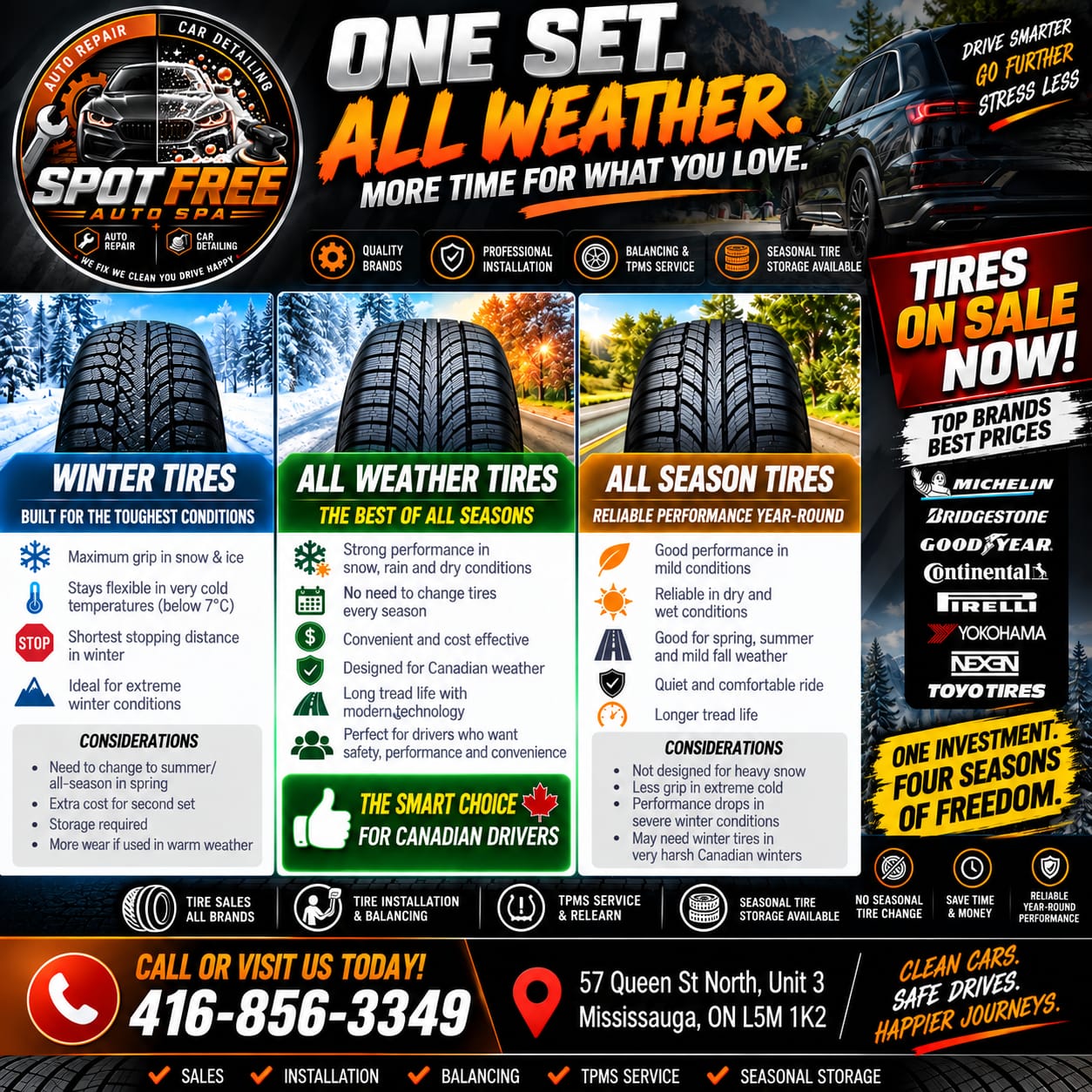

Choosing between winter tires and all-season tires is an important decision for Ontario drivers. Mississauga winters can bring freezing temperatures, snow, slush, freezing rain and icy roads, making tire selection especially important for everyday driving.
Winter tires are generally the safer choice for drivers who regularly travel in Ontario during winter. They use special rubber compounds and tread designs that provide better traction in cold weather, snow and ice. All-season tires offer year-round convenience but are not designed to provide the same level of winter performance.
All-weather tires are another option worth considering because they combine year-round usability with certified snow traction.
Understanding the differences can help you choose the right tires for your vehicle, driving habits and budget.
What Is the Difference Between Winter and All-Season Tires?
Winter and all-season tires are designed for different driving conditions. Their main differences involve rubber flexibility, tread patterns and traction.
Winter Tires
Winter tires are specifically designed for cold temperatures and challenging winter road conditions. Their rubber compounds remain more flexible when temperatures drop, helping maintain contact with the road.
They also feature deeper tread patterns and small grooves called sipes that improve grip on snow and icy surfaces.
Winter tires are particularly useful for drivers who regularly commute through Mississauga, travel on highways or drive early in the morning when roads may be icy.
All-Season Tires
All-season tires are designed to handle a variety of conditions, including dry roads, rain and occasional light snow. They offer a convenient option for drivers who do not want to change tires between seasons.
However, their rubber compounds can become harder in colder temperatures. This reduces their ability to grip snow-covered and icy roads compared with dedicated winter tires.
For drivers who regularly experience Ontario’s winter conditions, conventional all-season tires may not provide enough traction.
Winter Tires vs All-Season Tires: Side-by-Side Comparison
The following table highlights the main differences between these two tire types.
| Feature | Winter Tires | All-Season Tires |
| Cold temperatures | Designed for cold weather | Less effective as temperatures drop |
| Snow traction | Better grip on snow | Limited snow performance |
| Ice performance | Better winter traction | Less effective on ice |
| Rubber flexibility | Remains flexible in cold conditions | Can become harder in cold weather |
| Tread design | Deeper grooves and additional siping | Designed for broader seasonal use |
| Warm-weather driving | Wear faster in warm conditions | Suitable for warmer months |
| Best use | Regular winter driving | Mild conditions and year-round convenience |
The biggest difference is cold-weather performance. Winter tires are designed to maintain traction when temperatures fall, while all-season tires are intended to balance performance across several seasons.
Are Winter Tires Better for Mississauga Drivers?
For drivers who regularly travel during winter, winter tires are generally the better choice.
Mississauga drivers encounter different road conditions throughout the colder months. Residential streets, parking lots and major routes such as Highway 401, Highway 403 and the QEW can experience snow, slush, freezing rain and icy patches.
Winter tires help improve:
- Snow traction: Special tread patterns help grip snow-covered roads.
- Ice traction: Winter compounds and sipes support better grip in slippery conditions.
- Cold-weather braking: Flexible rubber helps maintain better contact with cold road surfaces.
- Handling: Improved traction can help drivers maintain control when accelerating, turning and braking.
Winter tires do not eliminate the risk of skidding or accidents. Drivers should still reduce speed, increase following distance and adjust their driving to road conditions.
What About All-Weather Tires?
All-weather tires are an alternative for drivers who want year-round convenience without switching between winter and summer tire sets.
The important distinction is that all-weather tires are designed to provide better winter capability than conventional all-season tires.
Look for the Three-Peak Mountain Snowflake (3PMSF) symbol on the tire sidewall. This mountain-and-snowflake marking identifies tires that meet a specific severe-snow traction performance standard.
| Tire Type | Main Purpose | Winter Capability |
| Summer tires | Warm-weather performance | Not suitable for winter conditions |
| All-season tires | General year-round driving | Limited in severe winter conditions |
| All-weather tires | Year-round use with winter capability | Better snow performance when 3PMSF certified |
| Winter tires | Cold-weather driving | Best suited to snow and ice conditions |
Do not confuse the M+S marking, which means Mud and Snow, with the 3PMSF symbol. They are not equivalent certifications.
For drivers who experience regular heavy snowfall or icy conditions, dedicated winter tires remain a strong choice. All-weather tires may suit people who drive less frequently in severe winter weather and prefer one set throughout the year.
When Should You Install Winter Tires in Ontario?
A useful guideline is to consider switching to winter tires when temperatures consistently fall below 7°C.
Transport Canada explains that conventional all-season and summer tire rubber can lose flexibility as temperatures drop. Winter tires are designed to maintain better cold-weather performance.
There is no single legally required installation date for ordinary passenger vehicles in Ontario. However, waiting until the first major snowfall can leave drivers unprepared.
Consider installing winter tires when:
- Daily temperatures regularly fall below 7°C.
- Overnight freezing becomes common.
- Snow, slush and freezing rain become more frequent.
- Your regular commute includes highways and roads that may not be fully cleared.
In spring, consider changing back when temperatures remain consistently warmer. Winter tires can wear more quickly in warm conditions, so using them throughout summer is not recommended.
Are Winter Tires Mandatory in Ontario?
No. Winter tires are not legally mandatory for ordinary passenger vehicles in Ontario.
However, they are strongly recommended for safer winter driving. Drivers should also understand that the rules can differ when travelling to other provinces.
For example, Quebec has a mandatory winter tire period for certain vehicles. Drivers travelling outside Ontario should check the regulations that apply to their destination.
Studded tires are generally restricted in Southern Ontario, subject to specific provincial exceptions.
Can Winter Tires Reduce Your Car Insurance Premium in Ontario?
Yes. Ontario insurers are required to offer a winter tire discount to eligible policyholders.
The actual discount depends on the insurance company and its requirements. Some insurers may require qualifying winter tires to be installed during a specified period.
Before purchasing tires, contact your insurance provider and ask:
- Which tire types qualify for the discount?
- Must the tires carry the 3PMSF symbol?
- Do all-weather tires qualify under the policy?
- When must the tires be installed?
- Is proof of purchase or installation required?
Do not assume every all-weather tire automatically qualifies. Insurance eligibility can vary between providers.
Do AWD and 4WD Vehicles Need Winter Tires?
Yes. All-wheel drive (AWD) and four-wheel drive (4WD) vehicles can still benefit from winter tires.
AWD and 4WD systems help distribute engine power to the wheels, improving traction when accelerating. However, they do not automatically improve braking or cornering grip on ice and snow.
Winter tires help provide traction during braking, turning and acceleration.
For balanced handling, install four matching winter tires rather than only two. Mixing winter and non-winter tires can create differences in grip that affect vehicle stability.
How to Know When Your Winter Tires Need Replacing
Even good-quality winter tires lose effectiveness as their tread wears down.
Before installing your tires, inspect them for:
- Uneven tread wear
- Cracks or visible damage
- Bulges on the sidewall
- Embedded objects
- Low tread depth
- Signs of ageing or deterioration
Transport Canada advises that tires worn close to 4 mm (5/32 inch) should not be used on snow-covered roads because winter traction can be reduced.
Also check tire pressure regularly. Cold temperatures can lower tire pressure, so follow the vehicle manufacturer’s recommended pressure rather than the maximum pressure printed on the tire sidewall.
If you are unsure about your tire condition, have them inspected before winter driving begins.
Which Tires Should You Choose?
The right choice depends on how often you drive, the roads you use and how much winter weather you experience.
Choose winter tires if:
- You commute regularly during winter.
- You frequently drive on snow-covered or icy roads.
- You travel on highways during cold weather.
- You want dedicated tires designed for severe winter conditions.
Choose all-season tires if:
- You primarily drive in mild weather.
- You experience limited winter driving.
- You understand their limitations in snow and freezing temperatures.
Consider all-weather tires if:
- You prefer one tire set throughout the year.
- You want better winter capability than conventional all-season tires.
- You choose a model carrying the 3PMSF symbol.
- Your driving conditions are not consistently severe enough to require dedicated winter tires.
Your vehicle’s recommended tire size, load rating and speed rating should always be checked before purchasing replacement tires.
For more information about maintaining your vehicle through changing seasons, read our guide to car maintenance services.
Final Thoughts
When comparing winter tires vs all-season tires in Ontario, winter tires are generally the better option for drivers who regularly face snow, ice, slush and freezing temperatures. Their flexible rubber compounds and specialized tread patterns provide better cold-weather traction.
All-season tires offer convenience, while 3PMSF-certified all-weather tires provide another option for drivers who prefer year-round use.
For Mississauga drivers, the best decision depends on commuting habits, road conditions, vehicle requirements and personal preferences. Checking tire condition, maintaining correct pressure and installing four suitable tires can make winter driving safer.
For automotive maintenance assistance, contact Spot Free Auto Spa & Auto Repair at (416) 856-3349.
FAQs
1. Are winter tires better than all-season tires in Ontario?
Yes. Winter tires generally provide better traction, braking and handling in cold temperatures, snow and ice. All-season tires are designed for broader seasonal use but are less effective in severe winter conditions.
2. Can I drive with all-season tires in Mississauga during winter?
Yes, it is legal for ordinary passenger vehicles in Ontario. However, all-season tires may provide limited traction during heavy snowfall, freezing rain and icy conditions. Winter tires are generally the safer choice for regular winter driving.
3. At what temperature should I switch to winter tires?
The commonly recommended guideline is 7°C. When temperatures consistently fall below this point, winter tires can provide better traction because their rubber compounds are designed for colder conditions.
4. Are winter tires mandatory in Ontario?
No. Ontario does not require ordinary passenger vehicles to use winter tires. However, they are recommended for improved safety during winter driving.
5. Do all-weather tires count as winter tires?
Many all-weather tires carry the Three-Peak Mountain Snowflake symbol, indicating they meet a severe-snow traction performance standard. However, check your insurer’s requirements before assuming an all-weather tire qualifies for a winter tire discount.
6. Do AWD vehicles need winter tires?
Yes. AWD improves acceleration traction but does not replace the braking and cornering benefits of appropriate winter tires. Four suitable winter tires can help improve vehicle control.
7. How many winter tires should I install?
Install four matching winter tires. Installing winter tires on only the front or rear axle can create an imbalance in traction and handling.
8. Can winter tires reduce my insurance premium in Ontario?
Yes. Ontario insurers must offer a winter tire discount to eligible policyholders. The discount amount and qualifying requirements vary, so check directly with your insurance provider.
9. Can I use winter tires throughout the summer?
It is not recommended. Winter tires can wear more quickly in warm temperatures and may provide less suitable handling on hot pavement. Switching to appropriate warm-weather tires in spring helps protect tire performance and lifespan.