A dirty car interior can quickly become difficult to clean when stains, pet hair, and odors build up together. A quick vacuum may remove loose dirt, but embedded dog hair, spilled coffee, pet urine, food stains, and unpleasant smells often need a more careful approach.
The basic rule is simple: remove the contamination instead of covering it up. Stains need appropriate spot treatment, pet hair usually needs agitation before vacuuming, and odors require finding the source before deodorizing.
If you are looking for a deeper local service, read our guide car detailing in Mississauga to understand what professional interior detailing can include.
Why Are Car Interior Stains, Odors, and Pet Hair Difficult to Remove?
Car interiors contain many different materials, including fabric, leather, vinyl, plastic, carpet, and delicate headliner material. Each surface can react differently to moisture, chemicals, heat, and aggressive scrubbing.
Pet hair can become woven into carpet and upholstery fibers, especially around seat rails, seams, floor mats, and cargo areas. Simply running a vacuum over the surface may leave behind deeply embedded hair.
Odors can be even more challenging because the source may be hidden beneath the visible surface. Pet urine, spilled milk, food, smoke, damp carpet, and other contaminants can affect upholstery, carpet backing, seat foam, or floor mats.
How to Remove Stains From Car Seats and Carpet
For most fabric and carpet stains, the safest approach is to work from identification → treatment → agitation → extraction → drying.
1. Identify the Material First
Before applying a cleaner, determine whether the affected area is fabric, carpet, leather, vinyl, or another material. A product suitable for fabric may not be appropriate for leather or delicate trim.
Always follow the cleaner manufacturer’s instructions and test an inconspicuous area first.
2. Remove Loose Dirt
Vacuum crumbs, dust, pet dander, and loose debris before treating the stain. Otherwise, you can turn dry dirt into muddy residue when moisture is introduced.
Pay attention to floor mats, seat seams, door panels, the center console, and areas around the seat rails.
3. Pre-Treat the Stain
Apply an appropriate interior cleaner or stain treatment to the affected area. Coffee, juice, food, grease, mud, milk, ink, pet stains, and salt deposits may require different approaches.
Avoid soaking the upholstery. Excess moisture can make drying more difficult and may create additional problems.
4. Agitate Carefully
Use a suitable detailing brush or microfiber towel to work the cleaner into the material. Aggressive scrubbing can damage fibers or change the appearance of delicate upholstery.
For leather, use products designed specifically for automotive leather rather than treating it like fabric.
5. Extract and Dry
For heavily soiled fabric or carpet, professional extraction can remove loosened contamination and cleaning solution more effectively than surface wiping alone.
After cleaning, allow the interior to dry properly. Good ventilation is important, particularly after cleaning carpets, seats, or floor mats.
How to Remove Pet Hair From Your Car
Pet hair removal is mainly a mechanical cleaning process. The goal is to loosen hair that has become embedded before collecting it.
A useful process is:
- Remove large loose hair by hand.
- Use a rubber brush, rubber glove, squeegee, or suitable pet-hair tool to loosen embedded hair.
- Work carefully around seams, seat rails, carpet edges, and crevices.
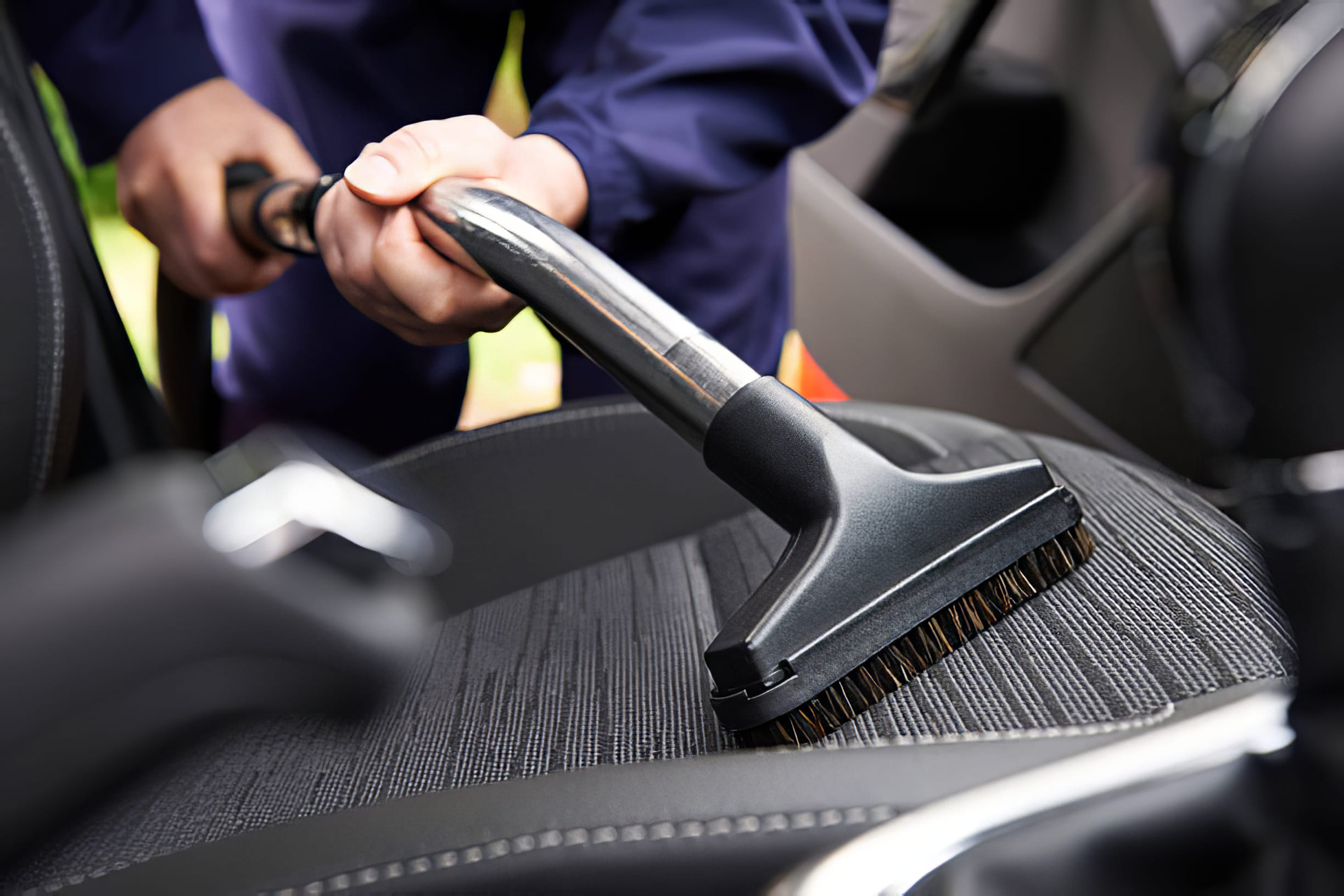
- Vacuum the loosened hair.
- Use a lint roller or similar tool for remaining fine hairs.
- Clean the underlying upholstery or carpet if necessary.
Professional detailers commonly use specialized rubber tools, compressed air, brushes, vacuum systems, and extraction equipment for difficult pet-hair jobs. Local Mississauga detailing services also advertise specialized pet-hair removal using rubber brushes, compressed air, vacuum extraction, and lint rollers.
This approach works for both dog hair and cat hair, although short, fine hair can sometimes be particularly difficult to remove from dense carpet fibers.
How to Remove Pet Odors From a Car
Getting rid of a dog smell or cat smell requires more than spraying an air freshener.
First, locate the source. Check:
- Seats and upholstery
- Carpet and floor mats
- Seat foam
- Cargo areas
- Areas underneath removable mats
- Spilled food or drinks
- Pet urine or vomit contamination
- Damp areas
Clean the contaminated surface before applying a deodorizing treatment. For organic contamination, an appropriate enzyme cleaner may be useful when compatible with the material.
If the odor keeps returning after cleaning, the contamination may have reached deeper into carpet backing, padding, or seat material. This is one situation where professional car interior detailing can be useful.
What About Smoke, Food, Mildew, and Other Odors?
Smoke, food, dampness, and mildew-related smells should also be approached by finding and cleaning the source. Fragrance can temporarily change what you smell without removing the contamination responsible for the odor.
Steam cleaning, shampooing, extraction, ventilation, and targeted deodorizing may all have a role depending on the source and the materials involved. Mississauga detailing providers commonly use combinations of pretreatment, shampooing, extraction, and deodorizing for heavily soiled interiors.
Is Ozone a Good DIY Odor Solution?
Ozone should not be treated as a simple car air freshener or first-line DIY solution. The U.S. EPA warns that ozone is a lung irritant and says ozone-generating devices should not be used in occupied spaces. The EPA also notes that ozone at concentrations within public-health standards has limited effectiveness for controlling many indoor contaminants.
The better starting point is always source removal, cleaning, drying, and ventilation. Any specialized odor treatment should be performed with appropriate safety controls.
Steam Cleaning vs. Extraction for Car Interiors
Steam cleaning and extraction are not exactly the same.
| Method | Best suited for | Main benefit |
| Steam cleaning | Hard surfaces and suitable upholstery | Uses heated steam to loosen contamination |
| Shampooing | Fabric and upholstery | Helps break down surface soil |
| Hot water extraction | Fabric, carpet, and upholstery | Flushes and removes loosened contamination |
| Vacuuming | Loose dirt and hair | Removes dry debris |
| Enzyme treatment | Suitable organic stains and odors | Targets organic residue |
The correct method depends on the surface and type of contamination. A professional may combine several methods rather than relying on one cleaning technique.
DIY Car Interior Cleaning vs. Professional Detailing
DIY cleaning can work well for fresh spills, light dirt, loose pet hair, and routine maintenance. It becomes more difficult when contamination is widespread, deeply embedded, or repeatedly returns.
| Situation | DIY may be enough | Professional detailing may help |
| Light dust and crumbs | ✓ | |
| Small fresh stain | ✓ | |
| Loose pet hair | ✓ | |
| Heavy embedded pet hair | ✓ | |
| Old stains | Sometimes | ✓ |
| Persistent pet odor | ✓ | |
| Heavily soiled carpet | ✓ | |
| Deep extraction required | ✓ | |
| Odor keeps returning | ✓ |
Professional interior detailing can combine vacuuming, agitation, steam cleaning, shampooing, extraction, stain treatment, and deodorizing according to the condition of the vehicle.
How Much Does Interior Cleaning Cost in Mississauga?
There is no single price for car interior cleaning because the work can vary considerably between vehicles.
Current Mississauga service listings show examples ranging from small add-on treatments to several-hundred-dollar intensive interior packages. For example, one local provider lists stain and spot removal from $20 and pet hair removal from $20, while another lists intensive interior detailing at $399 and notes that pet hair may involve an additional charge.
The final cost can depend on:
- Vehicle size
- Amount of pet hair
- Number and age of stains
- Odor severity
- Type of upholstery
- Amount of extraction required
- Condition of carpets and floor mats
- Time required to complete the work
For that reason, a heavily contaminated SUV should not automatically be compared with a lightly soiled sedan.
When Should You Get Professional Car Interior Detailing?
Professional interior detailing makes sense when normal cleaning no longer solves the problem.
Consider professional help when:
- Pet hair is embedded throughout the carpet.
- Old stains remain after careful treatment.
- Pet urine or vomit has caused a persistent odor.
- The entire interior needs a deep clean.
- Carpet or upholstery requires extraction.
- You are preparing a vehicle for sale or lease return.
- You do not have the equipment or time for extensive cleaning.
It is also important to have realistic expectations. Some stains permanently change the material, and some odors can remain when contamination has penetrated deeply. Local detailing providers explicitly state that complete stain or odor removal cannot always be guaranteed.
Common Car Interior Cleaning Mistakes to Avoid
Avoid these common mistakes:
- Soaking seats and carpet unnecessarily.
- Using harsh chemicals without checking material compatibility.
- Scrubbing delicate upholstery too aggressively.
- Applying excessive moisture to a headliner.
- Ignoring areas underneath floor mats.
- Leaving contaminated pet-hair areas untreated after vacuuming.
- Using fragrance to hide an unresolved odor.
- Mixing different cleaning chemicals.
- Cleaning around electrical controls without appropriate care.
The goal is not simply to make the interior look clean for a few hours. It is to remove the contamination while protecting the materials.
Car Interior Cleaning in Mississauga
Mississauga vehicles deal with everyday problems such as winter salt, slush, wet floor mats, muddy footwear, food spills, commuting dirt, and pet hair. Family vehicles and cars used regularly for pet transportation can accumulate several types of contamination at once.
Whether you are near Port Credit, Streetsville, Meadowvale, Erin Mills, Clarkson, Square One, or elsewhere in Mississauga, the right cleaning method depends more on the condition and materials inside the vehicle than on the location itself.
Spot Free Auto Spa provides car detailing services in Mississauga, including solutions for interior cleaning, pet hair, and odors. For a vehicle with multiple problems, a professional assessment can help determine whether basic cleaning, stain treatment, pet-hair removal, extraction, or deeper odor treatment is appropriate.
Final Thoughts
Removing stains, odors, and pet hair from a car interior requires more than a quick vacuum and air freshener. Start by identifying the surface and the source of the contamination, then use the appropriate cleaning method.
For pet hair, loosen it before vacuuming. For stains, treat the material carefully and extract when necessary. For odors, remove the source instead of simply covering it.
If the interior is heavily soiled, contains embedded pet hair, or has an odor that keeps returning, professional car interior detailing in Mississauga can provide the equipment and cleaning process needed for a deeper restoration.
FAQs
How do I get stubborn pet hair out of my car?
Loosen embedded hair with a rubber brush, glove, squeegee, or dedicated pet-hair tool, then vacuum it thoroughly. Finish with a lint roller for fine hairs.
Why won’t pet hair come out of my car carpet?
Pet hair can become embedded between carpet fibers through friction and pressure. Agitation helps loosen the hair before vacuuming.
How do I remove old stains from car seats?
Identify the seat material, remove loose dirt, apply a compatible stain treatment, gently agitate, and extract or wipe according to the material. Very old or permanent discoloration may not disappear completely.
How do I get rid of dog smell in my car?
Find and clean the source first. Check upholstery, carpet, mats, cargo areas, and other places where pet contamination may have occurred. Persistent odors may require deeper cleaning or professional odor treatment.
Does steam cleaning remove car odors?
Steam can help clean suitable surfaces and loosen contamination, but odor removal depends on eliminating the source. Deep contamination may require additional cleaning or extraction.
Does car detailing remove pet hair?
Yes. Professional detailers can use specialized rubber tools, brushes, compressed air, vacuum systems, and other methods to remove embedded pet hair from seats, carpets, seams, and crevices.
Can pet urine odor be removed from a car?
It can often be significantly reduced when the contaminated area is properly identified and cleaned. However, severe contamination that reaches carpet backing, padding, or seat foam can be more difficult to treat.
How much does car interior detailing cost in Mississauga?
Prices vary according to vehicle size, condition, stains, pet hair, odors, and the amount of cleaning required. Local providers list everything from individual add-on treatments to several-hundred-dollar intensive interior packages.
Is professional interior detailing worth it?
It can be worthwhile when the interior has heavy staining, embedded pet hair, persistent odors, or contamination that ordinary vacuuming and wiping cannot resolve.
How often should I deep clean my car interior?
Routine vacuuming and spot cleaning can be done regularly, while a deeper interior cleaning can be scheduled when dirt, stains, odors, or pet hair begin accumulating. Vehicles carrying pets or children may need more frequent attention.